
Portuguese Limestone in Cold Climates: Heritage, Durability and Exterior Cladding
The architectural heritage of limestone from Central Portugal and why it is valued for exterior cladding in cold and wet European climates.
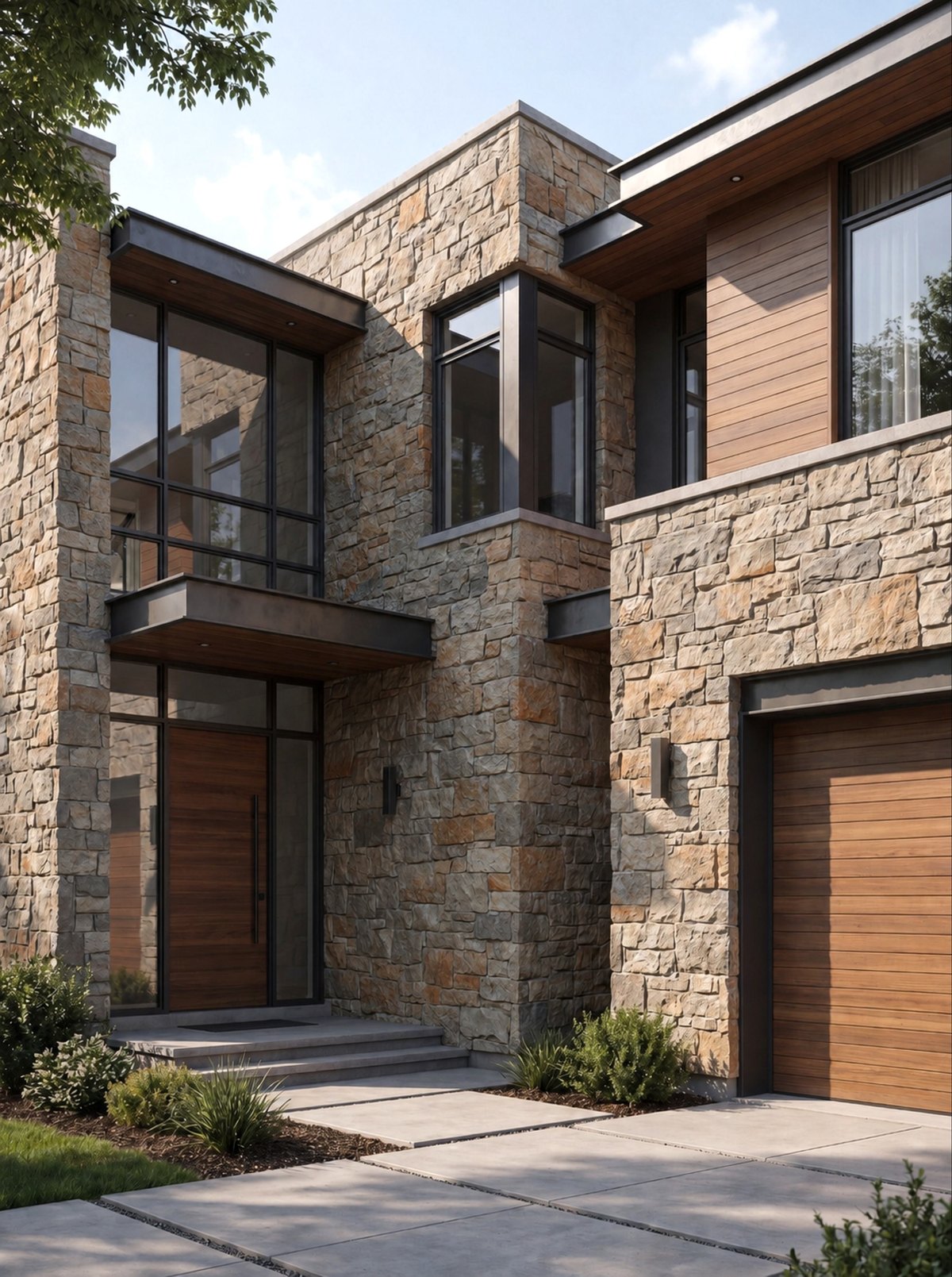
Portuguese limestone is one of the long-established building stones of Western Europe. It has been quarried, worked and built with for centuries, and it remains a material that architects reach for when an elevation has to look calm, substantial and unmistakably natural. In cold and wet climates, that reputation is not sentimental. It comes from a very practical tradition of using a workable, close-textured sedimentary stone in buildings that stand in rain, wind and frost, and of detailing those buildings so the stone is allowed to do what it does well.
Valtherra Stone supplies Portuguese natural limestone from Central Portugal, prepared as wall cladding for exterior and interior architecture. This article looks at the material through that heritage: where it comes from, why it has been valued for so long, how it behaves as a surface exposed to weather, and what that means for a contemporary façade in northern Europe.
A Long Architectural History
Limestone belongs to the oldest continuous tradition of European construction. It is a stone that can be quarried in useful block sizes, split along natural beds, dressed by hand and, when the design asks for it, carved. That combination — solidity with workability — is why limestone was used for load-bearing walls, arcades, window surrounds, thresholds, staircases, church interiors, civic façades and ordinary rural houses, often in the same region and sometimes in the same building.
In Portugal, limestone is not a specialist import but a local building material. Across the central and western regions of the country, limestone was the natural answer to almost every construction question: it built monasteries and parish churches, town halls and market buildings, farmhouses, boundary walls, courtyards and paving. Because it was the stone at hand, it was used structurally and ornamentally at once — a plain wall of squared blocks, and above the door a carved surround worked from the same quarry.
That double use matters to a modern specifier. It shows that the material has a long record both as a robust wall surface and as a stone fine enough to be worked. Contemporary cladding is a lighter application of exactly the same tradition: the stone is used as a facing rather than as a structural mass, but the qualities that made it attractive — colour, texture, workability, the way it ages — are unchanged.
The Limestone Heritage of Central Portugal
Central Portugal sits within the country's principal limestone belt, an area with a deep extraction culture. Quarrying here is generational work. Beds are known, opened and followed; blocks are read for tone and grain before they are split; and the distinction between what can be sold as a fine face and what is better used as walling is a judgement made by people who have handled the same stone for a working lifetime.
This is what is meant by the limestone heritage of Central Portugal: an accumulated body of knowledge about how the local stone is won, split, dressed, laid and maintained. It is expressed in the region's built environment, where limestone appears in religious, civic and residential architecture, and in the practical craft skills that survive around the quarries — splitting rather than sawing where a natural face is wanted, hand-working an arris, matching tone across a wall.
Valtherra Stone draws its material from this region and from this tradition. The stone supplied today is contemporary quarry material prepared for modern cladding assemblies; it is not the material of any named historic monument. What it shares with the region's architecture is provenance, geology and craft lineage — the same limestone belt, the same working culture, the same visual family.
Why Portuguese Limestone Is Valued for Exterior Architecture
Several qualities explain the material's persistence in European architecture, and each of them is as relevant to a new façade as it was to an old wall.
Colour and tonal range. Portuguese limestone offers a warm, light palette that runs from soft ivory and cream through beige and honey tones into greys. These are quiet colours that sit comfortably in northern light, where a saturated or heavily patterned stone can look restless. Valtherra Stone organises this range into three collections — Luminous Ivory, Sunset Gold and Alpine Heritage — so an elevation can be given a deliberate tonal character rather than an accidental one.
Response to natural light. Limestone has a matt, mineral surface that diffuses light rather than reflecting it. A limestone wall therefore changes appearance through the day: crisp and pale under high light, warmer and deeper in low winter sun, and softly modelled under overcast skies. In climates where the sky is grey for long stretches, this ability to hold interest in flat light is one of the material's real advantages.
Workability. The stone can be split, cut, chiselled and dressed. That is why it supports both regular coursed cladding and hand-worked faces, and why corners, reveals and special pieces can be produced rather than improvised.
Natural variation. Because it is a natural sedimentary stone, each piece differs in colour, tone, texture, shape and surface. Variation is the material's signature, not a defect, and a wall built from it reads as stone rather than as a manufactured panel.
Architectural compatibility. Limestone works with the materials contemporary architecture uses most: glass, exposed concrete, timber, dark metal, render, zinc. It provides mass and warmth without competing for attention, which is why it appears equally in Mediterranean vernacular, restrained modern housing, hotels and civic projects.
Interior and exterior use. The same stone can move from an external elevation into an entrance hall, a stair core or a fireplace wall, which allows a single material idea to run through a building.
International recognition. Portuguese limestone is exported widely and is well known in European architectural practice as a dependable, attractive natural stone. It is specified internationally precisely because it is familiar: architects know how it looks, how it is worked and how it weathers.
Material Structure, Moisture and Weathering
Limestone is a sedimentary carbonate stone with a fine, relatively close texture. Like all natural stone it is porous to some degree, and its behaviour on a building is largely a question of how much water reaches it and how easily that water leaves again.
In cold and wet climates the significant conditions are wind-driven rain, long periods of surface wetness, low temperatures and repeated freeze-thaw transitions. Stone that is able to dry between wettings behaves very differently from stone that is kept saturated — by a blocked cavity, a void behind an adhered panel, a horizontal surface without a fall, splash from paving, or standing water at the base of a wall. This is why the design of the wall around the stone matters at least as much as the stone itself, and why traditional limestone buildings in wet regions are full of overhangs, drips, sills, copings and generous plinths.
Weathering, in a well-detailed wall, is gradual and surface-related rather than structural. Exposed elevations gain tonal depth; sheltered ones stay closer to their original colour; areas that receive concentrated run-off darken first. These effects can be anticipated at design stage and used deliberately, which is what good limestone architecture has always done.
Surface Texture and Natural Ageing
Valtherra Stone supplies its limestone with a natural split-face texture as the standard surface character. Splitting rather than sawing leaves the stone's own fracture face visible, with genuine relief and depth, so a wall reads as broken stone rather than as flat tile. One product is supplied as a rectangular format with a hand-chiseled surface, where the visible face and arris are worked by hand for a tooled, more defined character. Format and surface remain two separate specification items: Irregular, Rectangular and Multiformat describe geometry; natural split-face and hand-chiseled describe the face.
Textured surfaces age well. Relief means shadow, and shadow absorbs the small irregularities that time introduces — a slight darkening in a recess, a lighter dressed edge, an area that has taken more rain than its neighbour. Instead of looking worn, the wall gains patina: a settled, slightly deeper tonality that most architects consider an improvement on the day it was handed over. This is why limestone is a material that suits buildings intended to look better in ten years than in their first photograph.
Exterior Cladding in Cold and Wet Climates
For a cold-climate elevation, the useful questions are about exposure and detail rather than about the stone's reputation.
Identify how exposed each elevation is — prevailing wind, driving rain, shade that keeps a wall damp — and identify the zones that always collect the most water: bases, splash areas near paving, positions under sills and behind planting. These zones drive the detailing.
Decide early whether the cladding is adhered to a solid backing or mechanically fixed within a ventilated cavity, because that decision determines how water behind the stone is drained and how the wall dries.
Then choose format and tone for the architectural effect wanted. Irregular format gives a quarried, traditional wall. Rectangular format gives coursed discipline and is the most straightforward to set out around openings. Multiformat mixes coordinated sizes for scale variation within legible coursing, and works best when the laying pattern is agreed before work starts. Pre-formed L-shaped corner elements are available in selected collections and formats; their wrapped return conceals the cladding thickness so a corner reads as solid stone masonry rather than as a clad face with a visible edge.
Interior applications — feature walls, entrances, stair cores, fireplaces — use the same material with none of the weather exposure, which is why the same stone can be carried inside to tie a building together.
Installation and Maintenance Principles
A few principles cover most of what keeps limestone cladding looking well in a cold, wet climate.
Fix to a sound, clean, dimensionally acceptable substrate, and keep water moving away from the wall. Where the cladding is adhered, aim for full, even bedding coverage so no voids are left behind the stone. Where it is mechanically fixed, keep the cavity continuous and its drainage and ventilation paths unobstructed at base, head, openings and floor lines.
Shed water at every horizontal surface. Copings, sills, string courses and plinth tops should fall away from the face and carry a drip that throws water clear. Keep the bottom of the cladding clear of paving, planting and standing water. Make sure gutters and downpipes discharge away from the elevation. Fill joints properly so they shed rather than hold water, and treat every bracket, light or service penetration as a detail with a defined seal.
Maintenance is light but worth scheduling. Clean gently and occasionally, using a method trialled on a discreet area first, to remove dirt and organic growth. Inspect joints, sealed penetrations, copings, flashings and drainage paths seasonally, clear blockages before winter, and repair small defects early — an open joint dealt with in autumn is a minor item.
Conclusion
Portuguese limestone has been used in European architecture for centuries because it is a handsome, workable, adaptable stone that ages with dignity. The limestone heritage of Central Portugal carries that tradition into contemporary practice, in a material whose colour, texture, light response and natural variation suit modern façades as readily as historic walls. In cold and wet climates it deserves the same respect it has always been given: a well-drained wall, honest detailing and modest, regular care. Given those, a limestone elevation does not merely survive the weather — it becomes more itself because of it.
Natural stone should be selected, specified and installed in accordance with the applicable product documentation, local requirements and intended use.
Interested in this stone for your project?
Discuss available formats, quantities and delivery requirements with our team.
Request a Quote